Medical SEO cost is difficult to compare because two proposals with the same monthly fee may contain completely different work. One may include only a Google Business Profile update and a ranking report. Another may include technical repairs, service and location pages, physician profiles, clinician-reviewed topic clusters, local listing management, conversion testing and appointment attribution.
In 2026, a realistic medical SEO cost for a U.S. practice commonly starts near $1,000 to $2,500 per month for a focused single-location campaign and can reach $5,000 to $15,000+ per month for competitive specialties, multi-location groups or content-heavy programs. Large healthcare organizations may invest more when the scope includes many websites, service lines, providers, markets, migrations or digital PR.
The right budget should be based on the work required to move qualified patients from search visibility to calls, appointment requests, scheduled visits and attended care. It should not be selected from a generic package name alone.
Quick Answer
Medical SEO usually costs between $1,000 and $15,000+ per month in 2026. A single-location clinic in a moderate market may invest $1,000 to $3,000 monthly. A competitive specialty or growing medical group may need $3,000 to $8,000 monthly. Multi-location and enterprise programs often range from $8,000 to $30,000+ because they require more technical work, local management, medical content, topic clusters, clinician review and reporting.
These are planning ranges, not universal quotes. Published 2026 pricing varies widely across providers, and the final fee depends on specialty, market, website condition, number of locations, content scope, authority gap and implementation responsibility.
Readers who need the full strategic foundation can review this guide to healthcare SEO for medical practices.
Medical SEO Cost Ranges For 2026
| Practice type | Typical monthly planning range | Common scope |
| Solo or small single-location practice | $1,000–$2,500 | Local SEO, essential technical work, GBP, core service pages and reporting |
| Established single-location specialty clinic | $2,500–$5,000 | Competitive service SEO, medical content, topic clusters, local authority and conversion work |
| Multi-provider or two-to-five-location group | $4,000–$10,000 | Multi-location pages, provider mapping, content production, technical implementation and attribution |
| Competitive specialty or major metro | $5,000–$15,000+ | Deeper content, clinician review, digital authority, procedure pages, local competition and conversion testing |
| Regional or enterprise healthcare organization | $10,000–$30,000+ | Multiple markets, service lines, governance, migrations, advanced analytics and digital PR |
The lower end may work when the site is technically healthy, the practice has one office, competition is moderate and the team can implement recommendations internally. The upper end becomes more likely when the practice has many locations, weak content, complex medical review, strong competitors or ambitious growth targets.
Published market examples vary. PatientGain’s medical SEO pricing lists typical retainers around $1,000 to $2,000 for a single-location practice, while other 2026 medical SEO providers publish ranges around $1,500 to $5,000 for U.S. practices. The Ahrefs SEO pricing survey also shows monthly retainers commonly reaching several thousand dollars across the wider SEO market. These sources describe their respondents, markets and services, not a mandatory industry price.
What Determines Medical SEO Pricing?

The fee reflects the amount and difficulty of work required. The following factors have the largest effect.
1. Specialty Competition
Search competition differs greatly between a family medicine clinic in a smaller market and a plastic surgery, fertility, dental implant, pain management or behavioral health practice in a major city.
Competitive specialties may require:
- More detailed service and procedure pages
- Stronger physician and location entities
- More clinician-reviewed content
- Better local authority and citations
- Original assets, case insights or research
- Digital PR and earned links
- More conversion testing
The medical SEO cost rises when competitors already have mature websites, hundreds of useful pages, established local profiles and credible third-party mentions.
2. Number Of Locations
Every genuine clinic location adds work:
- Google Business Profile management
- Unique location-page content
- Provider and service availability mapping
- Local citation checks
- Review monitoring
- Phone and appointment-route testing
- Local rank tracking
- Duplicate-listing control
A five-location group should not expect the same scope as one office. However, cost should not automatically multiply by five when technical systems, templates and reporting can be shared.
3. Number Of Services And Providers
A practice with four services and one physician needs fewer pages than a medical group with 30 treatments, 15 providers and multiple specialties. Each service and clinician relationship must be researched, verified, written, internally linked and maintained.
The agency should build a service-provider-location matrix before pricing content. This prevents proposals from charging for pages the practice does not need or omitting important commercial topics.
4. Current Website Condition
A healthy website may need steady optimization. A weak website may require major repairs before content can perform.
Cost increases when the site has:
- Indexing or crawling problems
- Duplicate city and service pages
- Broken forms and tracking
- Slow mobile templates
- Poor navigation
- Missing physician pages
- An unsafe migration history
- Multiple outdated domains
- Weak analytics and conversion attribution
A medical practice SEO audit can define the repair scope before a long-term retainer begins.
5. Content And Clinical-Review Requirements
Medical writing usually requires more verification than general business content. A strong workflow may include a strategist, medical writer, editor, clinician reviewer, SEO specialist and developer.
Pricing should reflect:
- Research depth
- Page length and complexity
- Physician interviews
- Source verification
- Medical review time
- Revisions after clinical feedback
- Original diagrams or videos
- Publication and internal linking
- Scheduled content updates
Low-cost proposals often remove these steps and produce generic articles at scale.
6. Local SEO Workload
Local SEO may include Google Business Profile work, directories, review strategy, location pages, duplicate suppression, category testing, local links and local-grid reporting.
The workload grows when profiles are suspended, ownership is unclear, doctors have separate listings or the organization operates at many addresses. This local SEO guide explains the wider local foundation.
7. Implementation Responsibility
Some providers deliver recommendations only. Others make the changes.
A lower proposal may exclude:
- Developer hours
- CMS publishing
- Schema implementation
- Form corrections
- Page redesign
- Image optimization
- Analytics configuration
- Local listing changes
Ask who will implement every recommendation. An audit without execution can remain unused for months.
8. Authority And Link Gap
If competing practices have strong physician profiles, news coverage, association links, local citations and trusted clinical references, the new campaign may require authority development.
Ethical authority work takes time because it depends on real assets and relationships. Bulk link packages may appear cheaper but can create quality and reputation risks.
9. Reporting And Lead Attribution
Basic rank reports cost less than a system connecting landing pages to calls, forms, scheduled appointments and attended patients.
Advanced reporting may require:
- Search Console and analytics configuration
- Call tracking
- CRM fields
- Booking-system integration
- Service and location reporting
- Lead-quality review with staff
- Privacy and compliance review
The measurement system should avoid unnecessary patient data while still showing whether SEO contributes to business growth.
Medical SEO Pricing Models
Monthly Retainer
Most sustained programs use a monthly retainer. It fits technical maintenance, local management, content production, internal linking, reporting and iterative improvement.
Typical planning range: $1,000 to $15,000+ per month.
Best for: Practices that need steady visibility, content and local growth.
Watch for: Vague deliverables, recycled reports and long contracts with no implementation schedule.
One-Time SEO Audit
A one-time project diagnoses technical, content, local, conversion and measurement problems.
Typical planning range: $1,500 to $10,000+, depending on website size and complexity.
Best for: Practices with an internal team, a redesign, a migration or an unexplained traffic decline.
Watch for: Automated exports presented as strategy. A useful audit should prioritize issues, show evidence and assign fixes.
Project-Based SEO
Projects may include a website migration, local-page rollout, topic cluster, technical cleanup or service-line launch.
Typical planning range: $3,000 to $30,000+.
Best for: Defined outcomes with a clear start and finish.
Watch for: Scope gaps involving medical review, development, publishing or post-launch validation.
Hourly Consulting
Hourly pricing fits strategy, team training, technical investigation and campaign oversight.
Typical planning range: $100 to $250+ per hour for experienced U.S. consultants and agencies, with regional variation.
Best for: In-house teams that can execute.
Watch for: Uncapped research time or no written deliverables.
Performance-Based Pricing
Payment may be connected to leads, appointments or another result. This model can sound attractive but requires exact definitions and careful compliance review.
Questions include:
- What counts as a lead?
- Who controls the website and profiles?
- How are duplicate or ineligible inquiries handled?
- Does the provider receive patient-level information?
- How are offline referrals separated?
- Can the arrangement create legal or ethical concerns?
Healthcare organizations should obtain appropriate legal and compliance guidance before using performance-based compensation tied to patients or referrals.
What Should A Medical SEO Retainer Include?

A serious proposal should explain the work, frequency, ownership and success metrics.
Strategic Foundation
- Business and patient-acquisition goals
- Specialty and market analysis
- Competitor review
- Keyword-to-URL map
- Service-provider-location matrix
- Priority roadmap
Technical SEO
- Crawling and indexation checks
- Canonical and sitemap management
- Core Web Vitals review
- Redirect and broken-link fixes
- Structured data
- Migration guidance where needed
On-Page And Content SEO
- Service and condition pages
- Physician profiles
- Location pages
- Patient information pages
- Medical review workflow
- Internal linking
- Content updates
Local SEO
- Google Business Profile work
- Category and service review
- Location-page alignment
- Citation cleanup
- Review-process guidance
- Duplicate control
Conversion Improvement
- Phone and form testing
- Mobile call-to-action review
- Appointment-route clarity
- Landing-page improvement
- Confirmation-page testing
Measurement
- Search visibility
- Calls and forms
- Qualified inquiries
- Scheduled appointments
- Attended visits where permitted
- Reporting by service and location
If a proposal says only “keywords, content and backlinks,” ask for more detail.
How Topical Authority Affects Medical SEO Cost
Topical authority is not a separate Google score that an agency can switch on. In practical SEO, it means building a well-organized body of useful content around the real services, conditions, clinicians and patient questions relevant to the practice.
A pain clinic, for example, may need connected pages covering:
- Back and neck pain conditions
- Diagnostic evaluation
- Interventional procedures
- Physician profiles
- Clinic locations
- Preparation and recovery questions
- Insurance and appointment information
The cost comes from research, content production, medical review, internal linking and maintenance. Publishing 50 generic articles does not create authority if the core treatment and physician pages remain weak.
Typical Topical-Authority Investment
| Scope | Planning range | What it may include |
| Small starter cluster | $2,000–$5,000 project | One core page, four to eight related pages, mapping and internal links |
| Specialty cluster | $5,000–$15,000 project | Service hub, condition pages, procedures, physician input and supporting questions |
| Multi-specialty content system | $15,000–$50,000+ | Several clusters, governance, medical review, content updates and reporting |
These figures vary with page depth, reviewer time, assets and implementation. A cluster should be built because patients need the information and the practice provides the service, not simply because a keyword tool shows volume.
How Topic Clusters Are Priced
A topic cluster usually contains a central page and related pages that answer narrower decisions.
For example:
Core Topic
Depression treatment
Related Service Pages
- Psychiatric evaluation
- Medication management
- TMS therapy
- Spravato treatment
Related Patient Questions
- When should someone see a psychiatrist?
- How does medication management work?
- What happens during a TMS session?
- How is treatment eligibility evaluated?
Entity Pages
- Psychiatrist profile
- Clinic location
- Insurance information
Pricing should include more than writing. A complete cluster requires:
- Search-intent mapping
- Page-role definition
- Clinical research
- Drafting and editing
- Medical review
- Internal linking
- Metadata and schema
- Publishing
- Indexation checks
- Performance review
The medical SEO cost for a cluster rises when topics involve complex procedures, multiple reviewers or several locations.
Practices in mental healthcare can see how provider, treatment and location entities connect in this guide to SEO for psychiatrists.
How Semantic SEO Changes The Budget
Semantic SEO organizes content around meaning, intent and relationships rather than repeating an exact keyword. It helps a website explain how a condition relates to an evaluation, treatment, physician and location.
Semantic work may include:
- Entity research
- Query and intent grouping
- Content-gap analysis
- Synonym and terminology review
- Page hierarchy
- Internal-link architecture
- Structured data
- Consistent provider and location naming
- Direct answers for conversational searches
This work is more strategic than inserting a keyword a fixed number of times. It can reduce waste by preventing duplicate pages and cannibalization.
Example Semantic Map
| Entity | Related entities | Best page relationship |
| Medical practice | Specialties, doctors, locations | Homepage and organization information |
| Condition | Symptoms, diagnosis, treatments | Condition page linked to care options |
| Treatment | Conditions, physician, location | Service page linked to provider and office |
| Physician | Credentials, specialties, locations | Profile linked to relevant services |
| Location | Doctors, services, hours | Unique clinic page |
Semantic SEO is often included within a monthly strategy rather than billed as a separate product. If it appears as an expensive add-on, ask what specific deliverables it contains.
How E-E-A-T Affects Healthcare SEO Pricing
E-E-A-T refers to experience, expertise, authoritativeness and trustworthiness. Google explains that search-quality raters use E-E-A-T concepts to evaluate results, but E-E-A-T is not one standalone ranking factor or a score that can be purchased.
For medical websites, trust work may include:
- Detailed physician profiles
- Verifiable credentials
- Named medical reviewers
- Reliable clinical sources
- Publication and review dates
- Editorial and correction policies
- Accurate clinic facts
- Privacy and contact information
- Original experience from clinicians or the practice
- Responsible claims and limitations
Where The Cost Comes From
The agency may need to interview physicians, verify credentials, coordinate review, rewrite unsupported claims, build reviewer profiles and create editorial processes. These activities require more time than adding an author name to a page.
Waseem Marketing Expert’s healthcare SEO portfolio shows work across pain management, psychiatry, dental, medical billing and related healthcare projects. Relevant first-hand experience can improve strategy when it is supported by accurate, verifiable work.
Does Ai Search Optimization Increase Medical SEO Cost?
AI search work should strengthen the same foundation required for organic search. Google advises site owners to create unique, useful content, keep pages crawlable and provide strong page experience for AI features in Search.
Useful AI visibility work may include:
- Direct answers below question headings
- Clear entity relationships
- Original practitioner insight
- Tables and numbered processes
- Reliable citations
- Consistent names and facts
- Descriptive images and video
- Technical crawl access
- Brand and citation monitoring
It should not be a vague fee for “AI keywords” or an unsupported promise to appear in every answer engine.
An agency may charge more when it adds AI visibility monitoring, digital PR, original research or multimedia. Basic answer formatting and semantic structure should already be part of strong SEO content.
Sample Medical SEO Budget Allocation
The following example shows how a $5,000 monthly budget might be divided. The actual mix should change based on priorities.
| Workstream | Example allocation | Purpose |
| Strategy and reporting | $600 | Roadmap, analysis and patient-lead reporting |
| Technical SEO | $700 | Crawl, indexation, speed and implementation |
| Local SEO | $700 | GBP, locations, citations and reviews |
| Content and topic clusters | $1,800 | Research, writing, editing and medical review |
| On-page and internal linking | $500 | Optimization and entity connections |
| Authority development | $400 | Outreach, profiles and earned mentions |
| Conversion improvement | $300 | Forms, calls and landing-page testing |
This is not a recommended universal split. A new website may need more technical work, while an established practice may invest more in content and authority.
What Can A $1,000 Monthly Medical SEO Budget Realistically Do?
A $1,000 budget can be useful when the scope is narrow. It may cover:
- One location
- One priority service line
- Basic technical monitoring
- Google Business Profile maintenance
- One strong content update or page each month
- Internal linking
- Simple reporting
It is unlikely to cover a full redesign, weekly clinician-reviewed content, several locations, aggressive link acquisition and advanced attribution at the same time.
The provider should name what will not be included so expectations remain realistic.
What Can A $3,000 To $5,000 Monthly Budget Do?
This range can fund a more complete program for a single-location specialty practice or small medical group:
- Technical implementation
- Local SEO
- Service and physician pages
- A structured topic cluster
- Medical review coordination
- Content updates
- Internal linking
- Conversion testing
- Qualified lead reporting
The exact output depends on content depth, developer access and competition.
What Can A $7,500 To $15,000+ Monthly Budget Do?
This range may fit competitive specialties, multi-location groups or broader growth goals:
- Multiple location campaigns
- Several service-line clusters
- Frequent clinician-reviewed content
- Advanced technical work
- Digital PR and authority development
- Physician and entity optimization
- Website conversion experiments
- Detailed service and location attribution
- AI visibility monitoring
High spending does not guarantee results. The proposal still needs clear priorities, ownership and measurable outputs.
Medical SEO Agency Versus Freelancer Versus In-House Team
| Option | Typical advantage | Common limitation | Best fit |
| Freelancer | Lower overhead and direct communication | Limited capacity across technical, content and local work | Small practices with a narrow scope |
| Specialist agency | Healthcare systems, writers, developers and reporting | Higher monthly fee | Practices needing coordinated execution |
| General agency | Broad marketing services | May lack medical review and healthcare search experience | Organizations with strong internal clinical oversight |
| In-house specialist | Deep practice knowledge and daily availability | Salary, tools and need for external expertise | Larger groups with steady workload |
| Hybrid model | Internal knowledge plus specialist execution | Requires clear ownership | Multi-location or growing practices |
Agency pricing is usually higher than freelancer pricing because the fee may cover several roles. The practice should compare team, scope and implementation rather than the provider label alone.
Hidden Costs To Check Before Signing
Ask whether the quoted fee includes:
- Initial audit
- Strategy and keyword mapping
- Medical writing
- Clinician revisions
- Developer time
- CMS publishing
- Image creation
- Schema implementation
- Citation fees
- Call-tracking fees
- Reporting platform fees
- Digital PR or link outreach
- Website hosting or maintenance
- Migration assistance
- Contract termination and asset ownership
A low retainer can become expensive when every meaningful task is billed separately.
Red Flags In Cheap Medical SEO Packages
Hundreds Of Pages Promised Quickly
Large-scale pages may repeat city names and generic medical text without providing real local or clinical value.
Guaranteed First-Page Rankings
No provider controls Google’s results. Competition, proximity, website history, content and authority all affect performance.
Unnamed Backlinks
Ask where links come from, why they are relevant and whether the practice can review risky placements.
No Clinician-Review Process
Medical content should not be published at scale without a plan for accuracy and review.
Reporting Only Rankings And Traffic
The practice needs calls, forms, booked visits and attended-patient feedback, not a chart of keyword movement alone.
No Ownership Of Content Or Accounts
The practice should know who owns the website, analytics, Google Business Profiles, content and call-tracking numbers.
One Package For Every Specialty
A psychiatry clinic, surgery center and dental practice do not have the same patient journey, page structure or compliance needs.
How To Compare Medical SEO Proposals
Use the same questions for every provider:
- Which services, providers and locations are included?
- What technical work will be implemented?
- How many pages are created or improved?
- Who writes and medically reviews the content?
- How are topic clusters selected?
- How will semantic relationships be built?
- What E-E-A-T work is included?
- Which local profiles and directories are managed?
- How are links and authority earned?
- Who owns the content and accounts?
- How are calls and appointments measured?
- Which tasks require extra fees?
- What happens during the first 90 days?
- How can the agreement be ended?
The cheapest quote is not automatically the best value, and the highest quote is not automatically the strongest program.
How To Calculate A Reasonable Medical SEO Budget
Start with business capacity rather than traffic wishes.
Step 1: Identify Priority Services
Choose the services that match clinical capacity, patient need and business goals.
Step 2: Estimate Patient Value Carefully
Use permitted financial data to estimate the value of an attended new patient, not the value of a raw form submission.
Step 3: Check Appointment Capacity
SEO cannot create value when providers have no availability or staff cannot answer inquiries.
Step 4: Set A Qualified-Patient Target
Define eligibility, service area, insurance or payment fit and service intent.
Step 5: Work Backward From Attended Visits
Estimate how many qualified inquiries, scheduled appointments and attended visits are needed.
Step 6: Choose The Smallest Scope Capable Of Reaching The Goal
Prioritize one specialty or market if the budget cannot cover every service and location well.
Practices may use Google Ads services for immediate high-intent demand while organic search builds over time. Paid media budgets should remain separate from SEO fees.
How Long Should A Medical SEO Investment Run?
Technical and local corrections may show early movement, but competitive service and city terms often require several months. Content clusters need time to be crawled, indexed, evaluated and strengthened through related pages and authority.
A practical review schedule is:
- First 30 days: Audit, baselines, keyword mapping and critical fixes
- Days 31 to 90: Priority pages, local corrections, internal linking and tracking
- Months 4 to 6: Cluster expansion, authority and conversion improvement
- Months 7 to 12: Scale proven topics, refresh weak pages and deepen local coverage
Do not judge the entire program from one ranking report after a few weeks. Also do not accept “SEO takes time” as a reason for no visible work. Deliverables and leading indicators should appear before long-term outcomes.
How To Measure Medical SEO Roi
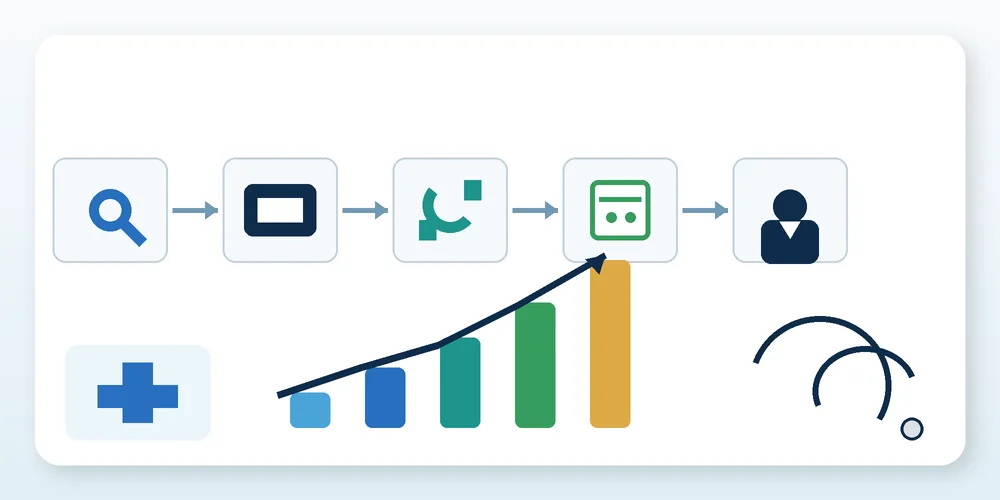
The reporting system should connect marketing activity to real patient growth while respecting privacy requirements.
| Funnel stage | Metrics | Main question |
| Visibility | Impressions, non-branded queries, local coverage | Can relevant patients find the practice? |
| Engagement | Service visits, physician views, phone and appointment clicks | Do pages match the decision? |
| Inquiry | Qualified calls and forms | Are the right visitors contacting the practice? |
| Scheduling | Booked appointments by service and location | Are inquiries becoming scheduled visits? |
| Attendance | Attended new-patient visits where permitted | Is SEO contributing to patient growth? |
| Financial impact | Permitted revenue or case-value attribution | Does the investment make business sense? |
Use the practice’s real conversion rates. Do not build ROI claims from traffic alone.
Waseem Marketing Expert provides SEO services and content writing services for organizations that need implementation based on services, locations and lead goals.
Frequently Asked Questions
How Much Does Medical SEO Cost Per Month In 2026?
Medical SEO commonly costs $1,000 to $15,000+ per month. A focused single-location campaign may fall near $1,000 to $3,000, while competitive specialties and multi-location groups may require $5,000 to $15,000 or more.
Why Does Medical SEO Cost More Than Basic Local SEO?
Medical campaigns may require clinician-reviewed content, physician credentials, treatment and condition mapping, multiple locations, privacy-aware tracking and stricter accuracy. These steps require more specialists and review time.
Is $500 Per Month Enough For Medical SEO?
$500 may cover limited maintenance or one narrow local task. It is unlikely to fund technical implementation, medical content, local SEO, authority work and conversion tracking together. The provider should define the exact scope.
How Much Does A Healthcare SEO Audit Cost?
A useful audit may range from $1,500 to $10,000+ based on website size, locations and complexity. The fee should include evidence, priorities and implementation guidance rather than an automated export alone.
How Much Does A Medical Topic Cluster Cost?
A small cluster may cost $2,000 to $5,000, while a deeper specialty cluster may range from $5,000 to $15,000 or more. Research, page count, clinician review, assets and publishing affect the total.
Is E-E-A-T A Separate Paid SEO Service?
E-E-A-T is not one Google score or a switch that can be purchased. The work involves verifiable authorship, physician profiles, medical review, sources, accurate practice information, original experience and trust policies.
Does Semantic SEO Require Special Software?
Software can help group queries and entities, but strategy matters more. Semantic SEO requires clear page roles, related terminology, internal links and consistent relationships between services, conditions, clinicians and locations.
Should Ai Search Optimization Cost Extra?
Clear answers, structured content, crawl access and reliable sources should already be part of quality SEO. Extra cost may be reasonable for AI visibility monitoring, original research, digital PR or multimedia, but vague “GEO packages” need clear deliverables.
How Long Before Medical SEO Produces Patient Leads?
Local and technical changes may produce early improvement within a few months. Competitive specialties and new websites often take longer. Timing depends on market, site history, content, authority and implementation speed.
How Should A Practice Choose An SEO Budget?
Start with priority services, patient capacity, competition, website condition and the number of locations. Choose a scope that can be executed well, then measure qualified inquiries, scheduled visits and attended patients.
Final Takeaway
The right medical SEO cost is the amount required to solve the practice’s actual visibility and patient-acquisition problems. A single-location clinic does not need an enterprise program, while a competitive multi-location group cannot expect a complete strategy from a minimal maintenance fee.
Compare scope before price. Confirm technical implementation, local management, medical review, topic clusters, semantic architecture, E-E-A-T work, authority development, conversion testing and patient attribution. Then judge value by qualified inquiries, scheduled appointments and attended patients rather than article count or rankings alone.
Medical practices can speak with a healthcare SEO expert in Pakistan or contact Waseem Marketing Expert for a scope based on their specialty, locations, competition and patient goals.