Ranking in Google AI Overviews is not about feeding a secret phrase to an AI crawler. Your page first has to qualify for normal Google Search, then become the clearest, most reliable source for one or more parts of the user’s question. That means solving technical access problems, mapping the sub-questions Google may search, answering them in self-contained sections and supporting important claims with evidence. The reward is not guaranteed, but the process can improve organic rankings, AI citations and the quality of visitors who reach your site.
To rank in Google AI Overviews, publish an indexable page that directly satisfies search intent, covers related sub-questions, adds first-hand evidence and makes every important answer easy to understand in isolation. Support it with strong internal links, accurate business or product data, useful media and visible authorship. Track citations and conversions, then update weak sections based on what Google cites.
Google’s position is refreshingly simple: there are no special technical requirements, new AI files or special schema types for AI Overviews. A supporting page must be indexed and eligible to appear in Google Search with a snippet. The rest is strong SEO applied to a search experience that can explore several related queries before producing an answer. Businesses that need implementation support can use professional SEO services in Pakistan to connect technical checks, content structure, internal linking and performance measurement.
No ethical SEO can guarantee an AI Overview citation. Sources can vary by query wording, location, device, freshness and Google’s systems. The practical goal is to increase eligibility, relevance, trust and useful coverage across the topic.
What are Google AI Overviews?
Google AI Overviews are generated summaries that appear for searches where Google believes a synthesized answer will add value. They combine information from multiple sources and show supporting links so users can explore the subject further.
They are not the same as featured snippets. A featured snippet normally highlights a passage, list or table from one page. An AI Overview can combine several sources, cover multiple parts of a question and change its cited pages as the query or context changes.
AI Mode is related but not identical. It supports longer conversations, follow-up questions and multi-part research. Google says AI Overviews and AI Mode may use different models and methods, so the same query may produce a different response or set of links in each experience. This Google AI Mode SEO guide explains how conversational search also affects content planning and service-page structure.
How Google Finds Sources for an AI Overview
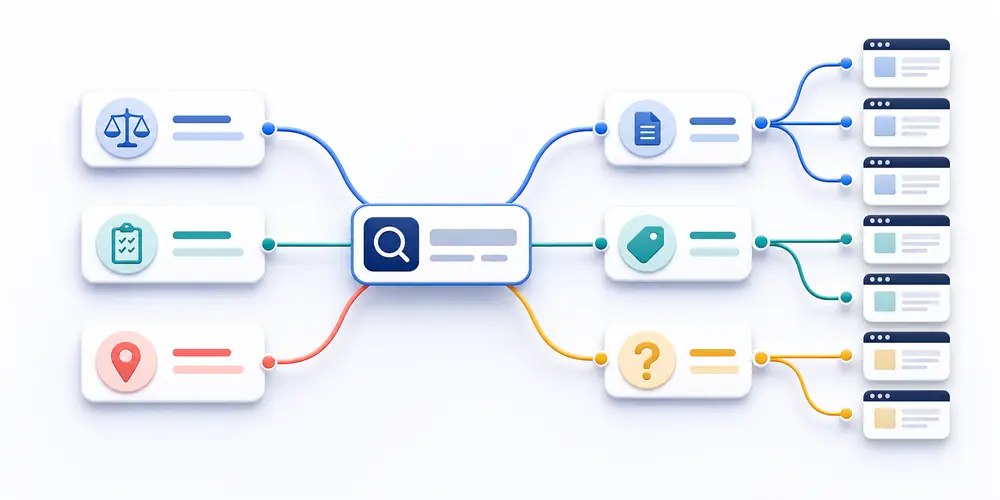
A useful way to think about the process is as four stages:
- Eligibility: Can Google crawl, index and show the page with a search snippet?
- Retrieval: Does the page match the main query or one of its related sub-queries?
- Selection: Does a section provide a clear, accurate and useful contribution to the answer?
- Presentation: Does Google decide an AI Overview adds value for this search, and does it choose your page as a visible supporting link?
Google confirms that AI features may use query fan-out. The system can run several related searches across subtopics and data sources before building a response. For a query such as “best accounting software for a small construction company,” related searches might cover job costing, mobile receipt capture, payroll, user limits, integrations and pricing. A page can earn a citation by being the strongest source for one of those supporting needs, even if it is not the top result for the original phrase.
This explains why one broad article is rarely enough. A strong page needs useful sub-sections, while the website needs supporting pages that cover adjacent customer questions.
What the Current Evidence Actually Says

Separate confirmed guidance from industry findings and assumptions:
| Evidence level | What it tells us | How to act on it |
| Confirmed by Google | Pages must be indexed and snippet-eligible; normal SEO practices still apply; query fan-out may be used | Fix access and indexing, write for users, add internal links, keep visible information accurate |
| Large third-party study | Ahrefs found about 38% of AI Overview citation URLs also ranked in the top 10 for the same query in its March 2026 dataset | Work on classic rankings, but also cover sub-queries and do not treat page one as the only citation pool |
| Controlled observational study | Adding JSON-LD did not create a meaningful citation gain in Ahrefs’ 2026 matched-page test | Use accurate schema for understanding and supported search features, not as an AI citation switch |
| User-behaviour study | Pew’s March 2025 US sample found fewer result clicks when an AI summary appeared | Give users a reason to visit beyond the short answer: tools, proof, examples, data and next steps |
| Unsupported claim | A fixed word count, keyword density, passage length or schema type guarantees inclusion | Ignore the formula unless a transparent and repeatable method supports it |
Classic SEO is still part of the system, but the updated citation overlap shows why the original keyword is only one part of the opportunity. Build for the main question and the smaller questions hidden inside it.
How to Rank in Google AI Overviews: 14 Steps
Step 1: Choose Queries Where an AI Overview Can Add Value
Start with problems that need explanation, comparison, planning or several steps. These are stronger candidates than simple navigational searches.
Useful patterns include:
- How does X work?
- Why is X happening?
- What is the difference between X and Y?
- Which option is better for a specific situation?
- How much does a service cost, and what changes the price?
- What should a buyer check before hiring or purchasing?
- Can X cause Y?
- What are the steps, risks or requirements?
Do not rely on search volume alone. A lower-volume question may influence an expensive decision and lead to a better customer. Prioritize the queries tied to your services, products and proven expertise.
Check the live results in the locations and languages that matter to your audience. Record whether an AI Overview appears, what format it uses, which claims are cited and which domains receive the links. Repeat the check because results can vary.
Step 2: Map the Main Intent and Query Fan-Out
Write the primary question in the middle of a worksheet. Around it, list the smaller questions a careful buyer would ask before accepting the answer.
Use:
- People Also Ask questions
- Related searches
- autocomplete suggestions
- customer calls, emails and chat logs
- sales objections
- support tickets
- comparison terms
- Search Console queries for an existing page
- headings and omissions in cited competitor pages
Group the findings by intent rather than by repeated wording. For a page about local SEO pricing, groups might include monthly retainers, one-time audits, business size, number of locations, included work, warning signs and expected timelines.
Now decide what belongs on the main page and what deserves a supporting page. If a subtopic needs its own examples, data or decision process, give it a separate URL and link both pages contextually.
Step 3: Confirm Crawl, Index and Snippet Eligibility
Content cannot become a supporting link if Google cannot use it in Search. Check the exact URL in Search Console’s URL Inspection tool.
Verify that:
- The Server Returns A Successful Status Code;
- Robots.Txt And Firewall Rules Allow Googlebot;
- The Page Has No Accidental Noindex Directive;
- The Canonical Points To The Intended Url;
- The Important Answer Is Present In Rendered Html;
- Internal Links Lead To The Page With Crawlable Anchors;
- The Page Is Included In A Current Xml Sitemap;
- Nosnippet, Max-Snippet Or Data-Nosnippet Is Not Hiding The Material You Want Google To Use;
- Mobile Users Receive The Same Essential Information;
- Intrusive Overlays Do Not Block The Content.
Google does not require an llms.txt file, an “AI schema” or a separate version of the page for AI Overviews. These additions should never distract from indexability and user experience.
Step 4: State the Best Answer Early
Open with the conclusion a user needs, not a history lesson. The first paragraph should answer the primary question, set realistic expectations and explain the decision or action that follows.
Use this pattern:
- Give the direct answer.
- Add the most important condition or exception.
- Tell the reader what to do next.
Then apply the same logic under major question-based headings. A person who lands on a section from a search result should understand it without reading five earlier paragraphs. Businesses that need this structure across blogs, landing pages and service pages can use SEO content writing services to turn keyword research into reader-focused answers.
Do not chase a rigid 40-word or 150-word extraction rule. Use the shortest length that answers the question accurately. Some definitions need two sentences; a high-risk process may need a list, warning and example.
Step 5: Build Self-Contained Answer Sections
Each important section should have one clear job. A strong answer block normally includes:
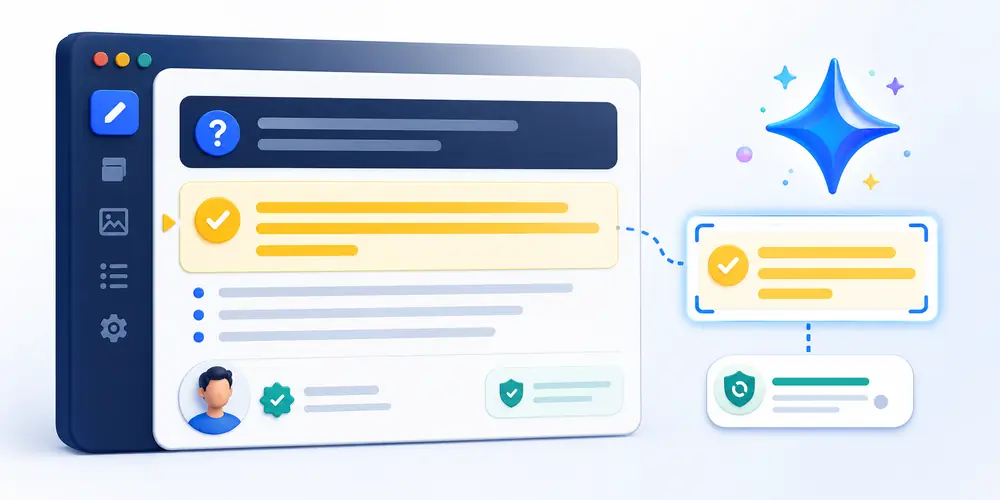
- A Descriptive H2 Or H3 That Matches A Real Question;
- A Direct Response In The First Sentence;
- The Reason or Mechanism;
- A Useful Condition, Exception or Example;
- A Source When The Statement Is Factual And Externally Verifiable.
Use lists for steps, tables for comparisons and short paragraphs for explanations. Formatting supports comprehension; it does not replace substance.
Avoid vague pronouns at the beginning of sections. “It depends on authority” is weak when read alone. “AI Overview citation selection depends on the query, the retrieved sources and the quality of the supporting passage” carries its context with it.
Step 6: Add Information Competitors Cannot Easily Repeat
Rewriting the same ten tips already present in search results gives Google little reason to cite your page. Add information gain through work your team actually performed.
Options include:
- A Before-And-After Example With Dates And Constraints;
- Anonymized Search Console Or Analytics Data;
- A Small Original Survey With The Sample And Method Stated;
- Screenshots From A Real Process;
- A Decision Tree Based on Client Cases;
- A Cost Range Drawn From Your Own Proposals;
- Common Mistakes Found During Audits;
- A Template, Calculator or Worksheet;
- An Expert’s Explanation of an Edge Case;
- Results That Did Not Work and What Changed Afterward.
Do not manufacture experience. If you have not tested a tactic, identify it as a recommendation or hypothesis. Trust grows when the reader can see what you know, how you know it and where uncertainty remains.
Step 7: Support Claims With First-Party and Primary Sources
AI-generated answers need grounding. Make verification easy by citing the best source for each material claim.
Prefer:
- Official Documentation For Platform Rules;
- Government Data For Laws and Public Statistics;
- Original Research Rather Than a Blog That Repeats It;
- Product Documentation For Product Behaviour;
- Your Own Clearly Explained Data For Your Results.
Use a descriptive anchor that tells the reader what the source contains. Place the link near the claim. Do not add a long reference list that is disconnected from the article.
Check sources during each major update. A dated statistic can remain useful when its time period is clear; an outdated platform instruction should be replaced.
Step 8: Show Who Created and Reviewed the Page
Visible authorship helps readers judge whether advice deserves trust. Add a byline, an author page and a short bio that names relevant experience without inflated claims. For example, an SEO and digital growth specialist page can connect the author’s name with experience, subject areas, credentials and selected work.
A useful author panel includes:
- Full Name And Role;
- Subject Areas The Person Works In;
- Years Or Type Of First-Hand Experience;
- Selected Work, Credentials Or Public Profiles That Can Be Verified;
- Reviewer Name For Legal, Medical, Financial Or Other High-Stakes Subjects;
- Published And Meaningfully Updated Dates.
Also explain the method when it affects trust. If an article includes a SERP study, state the date, market, device, query set and how citations were counted. “We checked 50 queries” is more useful than “our research shows” with no method.
Step 9: Build a Topic Cluster Around the Real Customer Journey

Topical authority is not created by publishing dozens of near-duplicate posts. It comes from covering related needs with the right page for each purpose.
A practical cluster for Google AI Overviews might include:
- What Ai Overviews Are;
- Ai Overviews Versus Featured Snippets;
- How Query Fan-Out Affects Content Planning;
- An Ai Seo Audit Checklist;
- How To Track Ai Citations;
- Schema And Ai Search Myths;
- Local Seo In Ai Search;
- A Case Study With Measured Outcomes.
Link supporting pages to the main guide and to each other when the next page helps the reader continue the task. Use anchors that describe the destination. Remove orphan pages and merge articles that answer the same intent.
The cluster should guide a customer from early education to evaluation and action. It should not exist only to repeat keyword variations.
Step 10: Use Structured Data Accurately
Structured data can help Google understand page entities and can make a page eligible for supported search appearances. Google says it must match the visible text, and there is no special structured data type required for AI Overviews.
For this type of guide, relevant markup may include:
- Article or BlogPosting for the article;
- Person for a real author;
- Organization for the publisher;
- BreadcrumbList for the page hierarchy;
- LocalBusiness on the proper business page when the details apply.
Only add FAQPage when the page genuinely presents questions with answers and the markup follows current Google policies. Do not expect it to force an AI citation or a visible FAQ result.
Validate Google-supported markup with the Rich Results Test and generic vocabulary with Schema.org’s validator. Fix errors and keep the data aligned with future page edits.
Step 11: Add Useful Images, Video and Text Alternatives
Some questions are easier to solve visually. Add media where it reduces effort or proves experience, not as decoration.
For this article, useful visuals would be:
- a simple query fan-out diagram;
- an annotated AI Overview showing the generated answer and supporting links;
- a four-stage eligibility-to-citation flow;
- a screenshot of URL Inspection checks;
- a content cluster map;
- a Search Console Generative AI performance report example.
Use descriptive filenames, concise alt text and nearby captions. Keep important facts in normal HTML text because Google advises making essential content available in textual form. Compress media, reserve its display dimensions and avoid loading a large video before the reader requests it.
Step 12: Strengthen Entity and Business Consistency
Google needs to understand who is making a claim and which real-world entity the page represents. Keep your organization name, service descriptions, author identities and contact details consistent across your site and trusted profiles.
For a local business, update the Google Business Profile, service categories, hours, website link and contact information. Create pages that answer location-relevant questions only when you have real experience and a legitimate relationship with that market. The local SEO guide for small businesses explains how Business Profile data, reviews, citations, service pages and local content work together.
A consultant serving Lahore, Karachi, Islamabad or clients across Pakistan can naturally describe the markets served, local search behaviour, pricing context and examples from those audiences. Repeating “AI SEO expert in Pakistan” in every heading would read poorly. Use the phrase once where the service is genuinely offered, then support it with proof, case work and clear contact details.
If you want local help with AI search visibility, website SEO and Google Business Profile signals, consult a GEO SEO expert near me with relevant experience in Lahore and Pakistan-wide campaigns.
The same principle applies to ecommerce: keep Merchant Center feeds, prices, availability, shipping and return information accurate. Entity consistency cannot rescue weak content, but contradictions can weaken confidence.
Step 13: Earn Independent Corroboration
Backlinks are not an official requirement for an AI Overview citation, and a page outside the top 10 can still be selected. Independent evidence still matters because readers and search systems need ways to verify reputation and claims.
Useful corroboration can include:
- expert contributions to relevant publications;
- citations of your original data;
- trade association profiles;
- genuine customer reviews on suitable platforms;
- podcast, webinar or conference appearances;
- partner pages that describe real work;
- community discussions where people mention the brand without prompting.
Avoid purchased mentions, fake reviews, mass guest posts and forum spam. The aim is not to manufacture popularity. It is to create work that informed people choose to reference.
Step 14: Measure Citations, Visits and Business Outcomes
AI citation tracking is less stable than classic rank tracking. A source may appear for one wording and disappear for another, so measure a set of related prompts over time. This comparison of AI visibility and SEO tools can help you choose a platform for citation monitoring, rank tracking, audits and Search Console analysis.
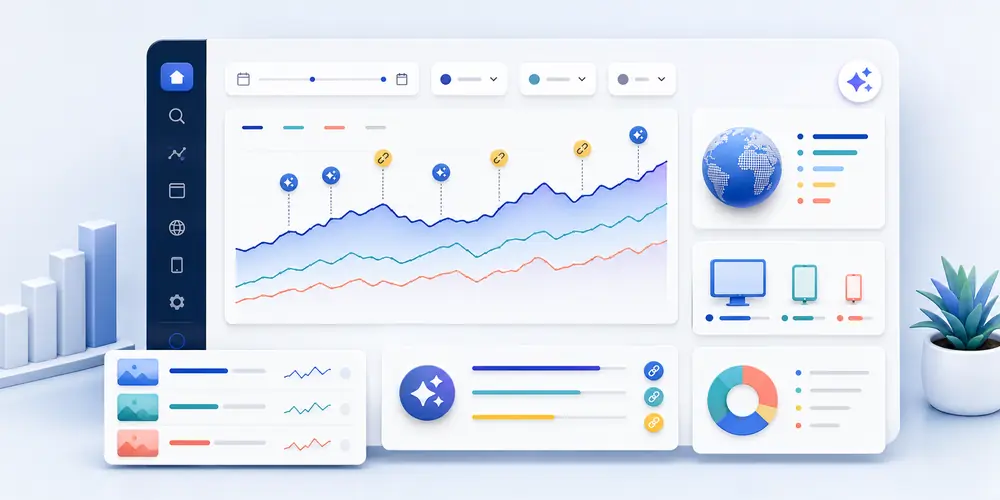
In June 2026, Google announced dedicated Search Generative AI performance reports for a subset of Search Console properties. The early reports show generative-AI impressions, pages, countries, devices and dates. If the report is available in your account, use it as the primary Google-provided visibility view. AI Overview data also follows Google’s stated Search Console counting rules: a supporting link must be expanded or scrolled into view to count as an impression, and all links in the Overview share the element’s position.
Also track:
- whether an AI Overview appears for each target query;
- which of your URLs are cited;
- citation share compared with named competitors;
- the claim or section associated with the citation;
- organic clicks and click-through rate;
- engaged sessions and time on page;
- assisted conversions, leads, calls and sales;
- branded searches and direct visits;
- changes after a specific page update.
Use a fixed market, language, device and query set for repeatable checks. Save screenshots with dates. Do not call a single manual search a trend.
A 30-Day AI Overview Optimization Plan
Days 1–5: Establish the Baseline
- Select 20–50 questions tied to revenue and expertise.
- Record current AI Overview appearance, cited sources and your organic position.
- Identify pages that rank or receive impressions but are not cited.
- Inspect indexing, canonicals, snippet controls and internal links.
Days 6–12: Fix the Highest-Value Page
- Rewrite the opening with a direct answer.
- Map sub-questions and missing intent groups.
- Split long, mixed sections into clear answer blocks.
- Replace unsupported statements with evidence.
- Add one original example, screenshot, data point or decision aid.
Days 13–20: Improve the Supporting System
- Create or update the most important supporting page.
- Add contextual internal links in both directions.
- improve the author and publisher information;
- validate relevant structured data;
- update Business Profile or product feeds when applicable;
- compress useful images and write accurate alt text.
Days 21–30: Verify and Learn
- Request recrawling for materially updated URLs.
- Recheck the same query set under the same conditions.
- record new citations, lost citations and source changes;
- compare engaged visits and conversions, not only impressions;
- choose the next page based on the largest evidence-backed gap.
One month may be enough to fix and test a page, but it is not a guaranteed inclusion timeline. Crawling, indexing, competition and query demand all influence when a change becomes visible.
Common Google AI Overview SEO Mistakes
Treating “AI SEO” as a Separate Technical System
Google says the same core SEO practices apply. A new file or plugin cannot compensate for blocked crawling, poor intent match or generic writing.
Writing for Extraction Instead of the Reader
Short answer blocks are useful only when they are accurate and connected to the reader’s next decision. Choppy definitions written solely for machines create a weak page.
Repeating the Primary Keyword
Google understands related language. Use natural variations such as AI Overview optimization, AI citations, supporting links and AI search visibility when they fit. Repetition does not create authority.
Publishing Unsupported Statistics
Many AI SEO figures are copied from page to page without a clear sample or date. Link to the original study, state its limits and remove numbers you cannot verify.
Adding Schema and Expecting an Immediate Citation
Schema should accurately describe visible content. Current evidence does not support treating it as a direct AI Overview ranking button.
Updating the Date Without Updating the Advice
A fresh date on old guidance can reduce trust. Review source links, screenshots, platform instructions, examples and conclusions before changing the update date.
Measuring Visibility Without Measuring Value
A citation for a broad definition may produce little revenue. Compare it with citations for evaluation, cost and decision queries, then track qualified actions.
How to Make a Citation Worth Clicking
An AI Overview may answer the basic question on the results page. Your page needs to offer value that cannot fit into a short summary.
Give the user a reason to continue with:
- an interactive calculator;
- a downloadable checklist;
- original benchmark data;
- full examples and screenshots;
- a location-specific or industry-specific explanation;
- a risk assessment;
- a comparison tool;
- a clear implementation template;
- expert help for a complex situation.
The title and opening should promise this next layer accurately. A clickbait gap may win a visit but lose trust and conversions.
Final Takeaway
The best way to rank in Google AI Overviews is to make your site easy to crawl, your answer easy to retrieve and your evidence easy to trust. Start with a question that matters to your audience. Map the related searches hidden inside it. Give each sub-question a clear answer, add experience competitors cannot copy, cite primary sources and connect the page to a useful topic cluster.
Treat schema as accurate labeling, not a shortcut. Treat top-10 rankings as helpful, not mandatory. Treat an AI citation as visibility, not the final business result. The winning page is the one that answers the immediate question while giving the reader a strong reason to visit, verify and take the next step.
If your business serves clients in Lahore or across Pakistan, an AI SEO expert in Pakistan should apply this process to your real customer questions, existing Search Console data and service evidence not insert local phrases into unrelated paragraphs. That approach supports Google AI Overviews SEO, standard organic rankings and qualified local demand at the same time.
Need a page-level review and a priority roadmap for Google Search, AI Overviews and AI Mode? Request an AI SEO consultation based on your website, audience, target locations and current performance data.
Frequently Asked Questions
Can a new website appear in Google AI Overviews?
Yes, a new site can be cited if its page is indexed, snippet-eligible and useful for the query. A new site usually has less historical reputation and fewer independent references, so original evidence, narrow subject focus and transparent authorship become especially important.
Do I need to rank in Google’s top 10 first?
No. Traditional visibility helps, but it is not a strict top-10 requirement. Ahrefs’ March 2026 dataset found that about 38% of AI Overview citation URLs appeared in the top 10 for the same query. Query fan-out can retrieve sources from related searches, so a page may contribute to a subtopic even when it does not rank highly for the original wording.
Does schema markup help a page get cited?
Use schema to describe visible content and qualify for supported search features, not as a guaranteed citation tactic. Google says no special schema is needed for AI Overviews. A 2026 Ahrefs matched-page study did not find a meaningful citation increase after pages added JSON-LD.
Do I need an llms.txt file for Google AI Overviews?
No. Google states that websites do not need new machine-readable AI files to appear. Googlebot access, indexability, snippet eligibility and useful content are the relevant foundations.
How long does it take to appear in an AI Overview?
There is no fixed period. A material update must be crawled and processed, and the target query must trigger an AI Overview. Competition, site history, demand and the quality of the new information can all affect the result. Measure changes over several crawls rather than promising a number of days.
Can AI-written content rank in AI Overviews?
The production tool is not the main issue. The page must be accurate, useful, original and created to help people. Human review is essential for facts, examples, tone and expert judgment. Mass-produced summaries with no added value are a poor strategy.
How can a local business appear in AI Overviews?
Keep the Google Business Profile and site details accurate, then publish expert answers to the questions customers ask before a local service search. Cost factors, hiring checklists, regulations, timelines and problem diagnosis can trigger research-led searches. Use real local examples and link the content to the relevant service page.
Can I pay Google to be cited in an AI Overview?
No organic citation can be purchased. Ads may appear on search result pages that also contain AI Overviews, but advertising does not guarantee a supporting-source citation.
How do I know whether an AI Overview citation produced a lead?
Use the Search Console AI reporting view if it is available, compare cited pages with analytics landing-page data and track form submissions, calls and sales. Add a CRM source note or landing-page field where appropriate. Because citation visibility does not always generate a click, also monitor branded searches and direct visits.