Your Google Maps ranking can fall even when the Business Profile is still live, verified, and appearing for your business name. That is what makes the problem so confusing: the listing looks normal, yet fewer people see it for searches such as “dentist near me,” “plumber in Lahore,” or another service you used to rank for. Before editing everything, find out whether you have a true ranking loss, a location-based fluctuation, lower search demand, or a profile-level issue. The right fix depends on that distinction.
Quick answer: Why did my Google Maps ranking drop?
A Google Maps ranking may drop because the searcher’s location changed, your profile or primary category was edited, the business moved, verification or policy issues appeared, a duplicate listing was created, competitors became stronger, reviews were removed, website relevance declined, or local results were recalculated. Diagnose the pattern before making changes.
Google states in its local ranking guidance that results are mainly based on relevance, distance, and prominence. No business can request or pay Google for a better organic local position. A drop usually means that one or more of these signals changed for a query, location, or time period or that the way you measured the ranking changed.
First, Confirm That the Ranking Drop Is Real
One manual search is not a reliable local rank report. Results vary by physical location, device, language, history, query, time, and map zoom. A business may rank third near its address and fifteenth several kilometres away.
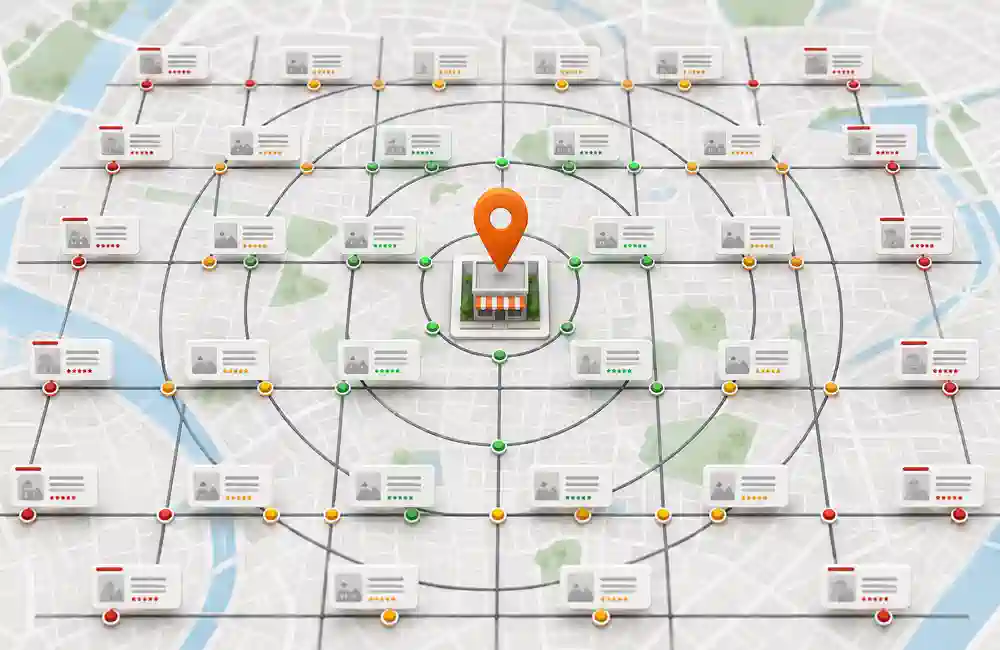
Use this quick diagnosis before changing your Google Business Profile:
| What you see | What it may mean | First check |
| Ranking changed on one phone only | Personalisation or a different search location | Compare from several real locations |
| Business ranks for its name but not its main service | Relevance, distance, or stronger competitors | Check categories, services, landing page, and geo-grid |
| Business vanished for its exact name | Verification, suspension, duplicate, merge, or profile issue | Search the name and address; check profile notifications |
| Ranking fell only outside a small radius | Proximity or stronger businesses nearer those searchers | Compare geo-grid points around the location |
| Several service keywords fell across the whole area | Profile, website, category, competitive, or wider ranking change | Compare the change date with edits and site data |
| Calls fell but ranking stayed stable | Demand, conversion, hours, tracking, or seasonality | Review profile performance and lead tracking |
| Website rankings fell but Maps positions did not | Organic SEO issue | Check Search Console, indexing, and landing pages |
| Maps positions fell but organic rankings stayed stable | Local profile or local-market issue | Audit profile, categories, reviews, duplicates, and competitors |
Track the same keywords from fixed geo-grid points on more than one day. Compare branded searches, non-branded services, “near me” queries, and service-plus-city terms.
Google Maps Ranking Drop vs Google Business Profile Not Showing
These are related but different problems.A ranking drop means the profile remains visible but appears lower for some searches. A profile not showing problem may involve verification, suspension, a duplicate, or eligibility. If the exact business name and address return no listing, investigate profile status before doing ranking work.
Sudden Drop or Gradual Decline? The Pattern Matters
A sudden Google Maps ranking drop often follows:
- The primary category, business name, address, pin, or website URL changed.
- Google asked for verification again.
- The profile was suspended, disabled, merged, or labelled as a duplicate.
- Reviews were removed in a short period.
- The linked landing page was redirected, deindexed, rewritten, or broken.
- A major competitor opened nearby or changed its category and local strategy.
- Local results experienced wider volatility.
A gradual decline more often points to:
- Competitors are gaining reviews, local mentions, links, or stronger service pages.
- Your site no longer matches the full search intent as well as competing pages.
- Business details have become outdated or conflicting across key sources.
- Search demand or customer language has shifted.
- Your visibility is stable close to the business but weakening farther away.
- New local competitors have increased result density.
Create a timeline of the ranking change, profile edits, website releases, reviews, location changes, verification messages, and competitor movement. Use it to test causes.
12 Reasons Your Google Maps Ranking Dropped
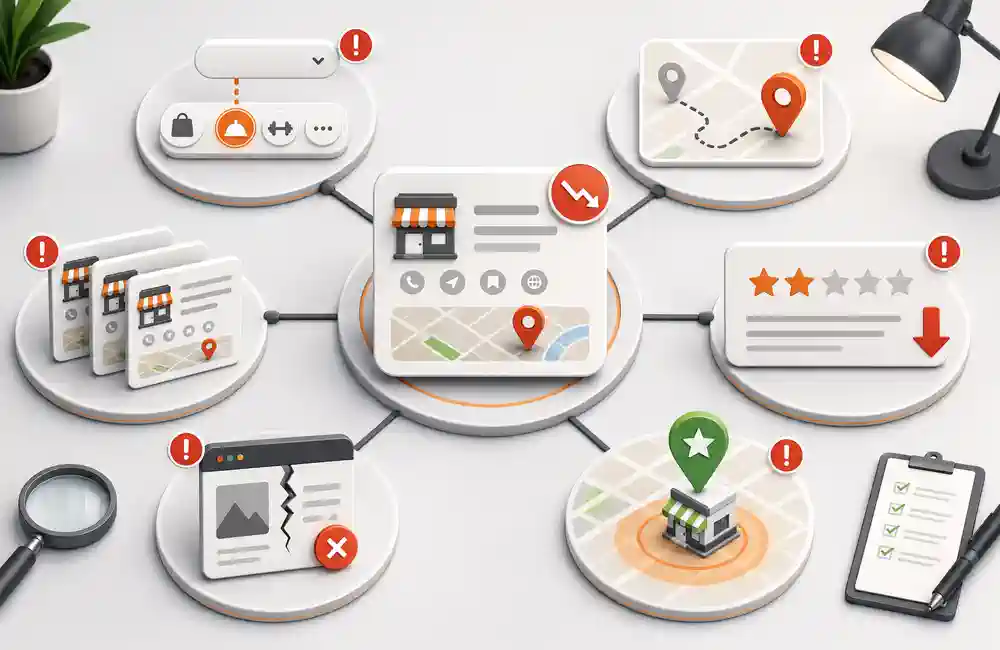
1. You Measured From a Different Location
Distance is one of Google’s three stated local ranking factors. If the person checking moves, results can change even though the business has not lost strength. This is common for searches without a named city, such as “roof repair near me.” Use a local rank grid or test from several real neighbourhoods; a citywide-looking fall may be limited to a few points.
Fix: Establish a consistent baseline. Track the same core queries from the same points and compare share of local visibility, not only one numbered position.
2. A Major Business Profile Edit Triggered Review or Re-verification
Changes to a business name, address, category, map pin, or ownership can lead to review or re-verification. Google says a verified business that moves must verify again, and a name change may also require verification. This does not mean every edit causes a penalty. The risk comes from conflicting or unsupported core details.
Fix: Check whether edits are live, pending, rejected, or followed by a verification request. Google’s profile editing guidance confirms that a name change may require verification and a moved business must verify again. Keep real-world evidence ready and do not keep reversing fields during review.
3. The Profile Has a Suspension or Policy Problem
A suspended or disabled profile can lose public visibility. Risks include a keyword-stuffed name, virtual office, ineligible address, multiple profiles for one business, or details that do not reflect the real operation. Google requires the profile name to match the real-world name, and service-area businesses that do not receive customers at their address should hide it.
Fix: Review Google’s business representation guidelines, correct the underlying issue, and use the official appeal process. If an evidence form is offered, Google says it must be submitted within 60 minutes of opening it. Do not create a new listing for the same business while the appeal is under review.
4. The Primary Category No Longer Matches the Main Query
Categories tell Google what the business is. If a dental clinic changes from “Dentist” to a narrower or unrelated category, it may gain visibility for one service while losing broader dental queries. Secondary categories can describe genuine parts of the business, but should not become a keyword list.
Fix: Compare the current category with the category used before the drop and with the actual primary service. Review legitimate competitors ranking for the target query, but do not copy categories for services you do not offer. Align the profile’s services and linked page with the same real offering.
5. The Business Address, Map Pin, or Service Model Changed
Moving changes the distance calculation. Even a move within one city can improve rankings in one area and reduce them in another. For a service-area business, adding many cities does not make it physically closer to searchers. Service areas show where the business travels; they do not cancel distance.
Fix: Use the precise eligible address, place the pin correctly, and choose realistic service areas. Update the website and important business records after a genuine move. Then measure a new geo-grid from the new base instead of comparing only with the old location’s strongest area.
6. Competitors Moved Up
Sometimes your business did not become weaker; competitors became more relevant or prominent. One may have a more accurate category, more genuine reviews, a better website, stronger local mentions, or a location closer to the searcher. Fake locations and business names padded with keywords can also distort results.
Fix: Compare the top five results before and after the change. Review their distance, primary category, review profile, linked page, service focus, and brand presence. If a listing clearly violates Maps rules, submit a factual correction or redressal report with evidence. Focus your main effort on legitimate competitive gaps.
7. Reviews Were Removed or Reputation Changed
Google says review count and score can affect local ranking. Reviews also influence whether users choose a result. A drop may follow the removal of reviews that Google considered spam or policy-violating. A lower average rating can reduce clicks even when positions barely changed, causing a conversion decline that looks like a ranking loss.
Fix: Compare total reviews, average rating, review dates, and profile interactions before and after the loss. Ask real customers for honest feedback through a consistent process. Never buy reviews, offer rewards for positive ratings, or ask only satisfied customers in a way that filters sentiment. Respond calmly to negative reviews and address the service issue behind them.
8. The Linked Website or Local Landing Page Lost Relevance
Google Maps and website SEO are not the same system, but the site helps Google and customers understand the business, services, and location. Rankings may weaken after a key page is removed, redirected incorrectly, blocked from indexing, filled with generic copy, or replaced by an unrelated homepage.
Fix: Open the website link from the profile and confirm it loads on mobile, uses HTTPS, returns a normal status, and can be indexed. Check Google Search Console for indexing and organic changes. The page should clearly state the real service, business, location or service area, contact details, proof, and next step. For a wider framework, see this guide to local SEO for small businesses.
9. A Duplicate, Merge, or Ownership Issue Appeared
Google allows one profile per eligible business location, with limited exceptions. If Google marks a listing as a duplicate, it will not show on Search or Maps. Incorrect merges can mix details, move reviews, or leave the wrong listing active.
Fix: Search Maps for the business name, phone number, old address, and current address. Note every profile and its review count. Do not remove or mark a listing closed until you know which profile is verified. Follow Google’s duplicate and ownership guidance to request access, appeal an incorrect duplicate status, or request a valid merge.
10. Hours, Open Status, or Core Details Became Inaccurate
Incorrect hours can cost customers even if the average rank is unchanged. Results may differ when a query or filter favours businesses open at that moment. An accidental closed label, wrong phone number, dead link, or conflicting address can reduce visibility or conversions.
Fix: Check regular hours, holiday hours, phone, website, booking link, address, and closed status. Correct facts, not rankings. Avoid changing normal hours to 24/7 unless staff genuinely serve customers throughout that period.
11. Search Demand, Seasonality, or Query Language Changed
Fewer calls do not prove lower rankings. Search volume can fall after a holiday, weather shift, economic change, or the end of a seasonal need. People may also use a different phrase. A clinic might keep its “skin specialist” position while demand moves toward a treatment-specific query.
Fix: Compare year-over-year demand, not only the previous week. Review Google Business Profile performance, Search Console queries, actual leads, and seasonality. Add genuinely offered services and useful content for the language customers now use, without repeating phrases unnaturally.
12. Local Results Are Being Recalculated
Google changes its search systems, and local results can fluctuate. Still, “algorithm update” should be a conclusion supported by a pattern. If many unrelated businesses changed on the same date, the movement may be wider. If only your profile dropped after an address or category edit, start there. Organic and Maps movement can overlap, but one does not prove the other.
Fix: Check several keywords, locations, competitors, and days. Do not make a dozen changes during short-term volatility. Record the baseline, fix clear errors, and wait for enough data to judge the result.
A 15-Minute Google Maps Ranking Drop Audit
Run these checks in order:
- Search the exact business name and city. Confirm the correct profile appears.
- Check profile status. Look for suspended, disabled, duplicate, verification, ownership, pending-edit, or closed notices.
- Open the listing as a customer. Test the phone, website, directions, booking link, hours, and map pin.
- Record recent edits. Note any changes to the name, address, categories, website, pin, ownership, and service areas.
- Compare more than one query. Test the brand name, main service, service plus city, and related high-intent services.
- Compare multiple locations. Use a geo-grid or checks from real neighbourhoods.
- Review Business Profile performance. Compare searches, views, calls, website clicks, messages, bookings, and direction requests where available.
- Check reviews. Look for a sudden change in total count, rating, or recent sentiment.
- Check the linked website. Confirm indexing, mobile access, content relevance, and correct business details.
- Inspect top competitors. Note which listings replaced you and what changed.
Label the issue:
- Profile availability problem
- Query relevance problem
- Proximity problem
- Prominence or competition problem
- Website support problem
- Measurement or demand problem
- Unconfirmed wider volatility
This label gives you the repair path.
How to Recover Lost Google Maps Rankings

Step 1: Protect Eligibility and Access
Resolve suspension, verification, duplicate, ownership, address, or guideline problems first. Keep the name, address, category, and service model grounded in real-world evidence.
Step 2: Restore Accurate Core Information
Correct the category, phone, hours, website, pin, and genuine address or service area. Avoid conflicting edits while Google is reviewing a change. Keep a dated log.
Step 3: Rebuild Query Relevance
Choose a primary category that represents the main business, add valid secondary categories, and list real services. The landing page needs specific service details, location context, evidence, FAQs, and a clear contact path. Avoid near-identical city pages; each needs real local value.
Step 4: Improve Trust and Prominence
Build a steady process for genuine reviews. Correct factual details on important directories, associations, social profiles, and local sites. Seek mentions and links based on real relationships, resources, cases, events, or community work. If needed, a local SEO expert in Pakistan can review the profile, site, competitors, and market together.
Step 5: Repair the Website Support Layer
Fix broken pages, redirects, indexing blocks, weak service copy, mobile problems, and conflicting details. Add accurate Organization or LocalBusiness structured data. Schema cannot replace eligibility, useful content, reviews, or relevance. Professional SEO services can help when Maps and organic traffic changed together.
Step 6: Measure Recovery by Area and Outcome
Track more than an average rank:
- Local visibility across a fixed geo-grid
- Branded and non-branded search visibility
- Calls and qualified call quality
- Website clicks and form leads
- Direction requests for customer-facing locations
- Bookings or messages
- Organic visits to the linked landing page
- Review count, rating, and recurring customer concerns
Use tools only when they answer a business question. These SEO tools for small businesses cover rank checks, technical audits, and search data.
What Not to Do After a Maps Ranking Drop
- Do not add services and city names to the business name unless they are part of the real-world name.
- Do not create a second profile because the first one fell.
- Do not use a virtual office, mailbox, or fake location.
- Do not change the primary category every few days.
- Do not move the map pin away from the real business.
- Do not buy reviews or use staff-created customer accounts.
- Do not remove the verified profile before investigating duplicates.
- Do not build copied location pages with only place names swapped.
- Do not assume posts, photos, or constant edits are guaranteed direct ranking factors.
- Do not promise a number-one position; distance and competition remain outside full business control.
Photos, posts, services, and review responses can still help customers understand and choose the business. The important distinction is between improving the profile for users and claiming that every activity directly moves rankings.
How Long Does Google Maps Ranking Recovery Take?
There is no single recovery period for a Google Maps ranking drop. A measurement error can often be resolved as soon as you check rankings from the correct location. A pending edit or re-verification depends on Google’s review process, while a suspension requires fixing the policy issue and a successful appeal. Website quality, local relevance, online reputation, and competitive gaps typically take longer because Google must recrawl the updated information and evaluate new signals over time.
A qualified GEO SEO Specialist can identify the root cause, prioritize the right fixes, and help restore your Google Business Profile visibility through a structured Local SEO strategy instead of relying on guesswork.
Judge progress after the cause is fixed, not from the date you first noticed the loss. Keep a timeline of:
- The suspected cause
- The corrective action
- The date it was completed
- Profile status
- Geo-grid visibility
- Performance interactions
- Leads and revenue
Avoid making a new major change before the previous one can be evaluated unless the profile is inaccurate or violating a rule.
When You Need a Local SEO Audit
Consider an audit when:
- The profile ranks by business name but has lost most service queries.
- Several locations dropped at once.
- The business moved, rebranded, merged, or changed ownership.
- Maps and organic website traffic declined together.
- A duplicate or practitioner listing is competing with the main profile.
- Rankings remain strong near the address but disappear across the target market.
- You cannot connect the drop to a specific event.
- Traffic is present, but calls and qualified leads are still falling.
A sound audit should provide evidence by query and location, a timeline, policy checks, competitor comparison, site findings, and an ordered action list.
Final Thoughts
When a Google Maps ranking drops, the fastest safe response is not making more edits—it is performing a better diagnosis. As a Local SEO Expert in Pakistan, I recommend confirming the ranking loss from consistent locations, separating branded from service-based searches, checking your Google Business Profile status, reviewing recent changes, analyzing top competitors, and inspecting the linked website for technical or SEO issues.
Then work from the root cause. Fix eligibility before relevance, relevance before promotion, and measurement before conclusions. This proven Local SEO approach protects your Google Business Profile, reduces unnecessary changes, and gives your business the best chance to recover Google Maps rankings, improve local visibility, and generate more qualified leads.
Frequently Asked Questions
Why did my Google Maps ranking drop suddenly?
A sudden drop may follow a business name, address, category, pin, website, or ownership change; re-verification; suspension; a duplicate or merge; review removal; a website issue; competitor movement; or wider local volatility. Check the exact date and compare it with a change timeline before deciding on the cause.
Can a Google update affect Maps rankings?
Google changes its search systems, so local results can move. Still, do not blame an update without evidence. Compare multiple businesses, queries, locations, and dates. A drop limited to one profile after a major edit is more likely to require a profile-specific investigation.
Do Google reviews affect local ranking?
Yes. Google states that more reviews and positive ratings can help local ranking. Reviews also affect trust and conversion. Ask real customers for honest feedback, follow review policies, and never buy or filter reviews.
Can editing a Google Business Profile hurt rankings?
An accurate edit is not automatically harmful, but major changes can trigger review or re-verification and can change relevance or distance. Business name, address, primary category, and map pin changes deserve careful tracking and real-world evidence.
Can changing the primary category cause a ranking drop?
Yes, visibility can change because categories help Google understand what the business is. A new primary category may improve one query set while weakening another. Choose the most specific category that truthfully represents the core business.
Why does my business rank for its name but not its service?
Branded visibility shows Google can identify the business. Weak service visibility more often points to relevance, distance, competition, website support, or prominence. Compare categories, services, the linked page, reviews, competitors, and geo-grid coverage.
Does hiding my address hurt Google Maps rankings?
Service-area businesses that do not receive customers at their location should hide the address under Google’s rules. Hiding it does not move the underlying business closer to other areas, and listing many service areas does not remove the distance factor. Follow eligibility rules and measure visibility from the true operating base.
Can a competitor’s spam push my listing down?
A fake location or keyword-stuffed competitor can occupy a result your business previously held. Document objective guideline violations and report them through the correct Google channel. Do not copy the tactic, and keep improving legitimate relevance and prominence.
How can I measure Maps rankings accurately?
Track a stable set of branded and non-branded keywords from fixed geo-grid points at similar times. Combine rankings with Business Profile performance, Search Console data, calls, website leads, bookings, and direction requests. One search from one phone is not enough.
How long does it take to recover Google Maps rankings?
It depends on the cause. Measurement issues are immediate to verify; profile review, verification, appeals, recrawling, competitive work, and reputation growth take different amounts of time. No ethical provider can guarantee a fixed recovery date or a permanent number-one position.